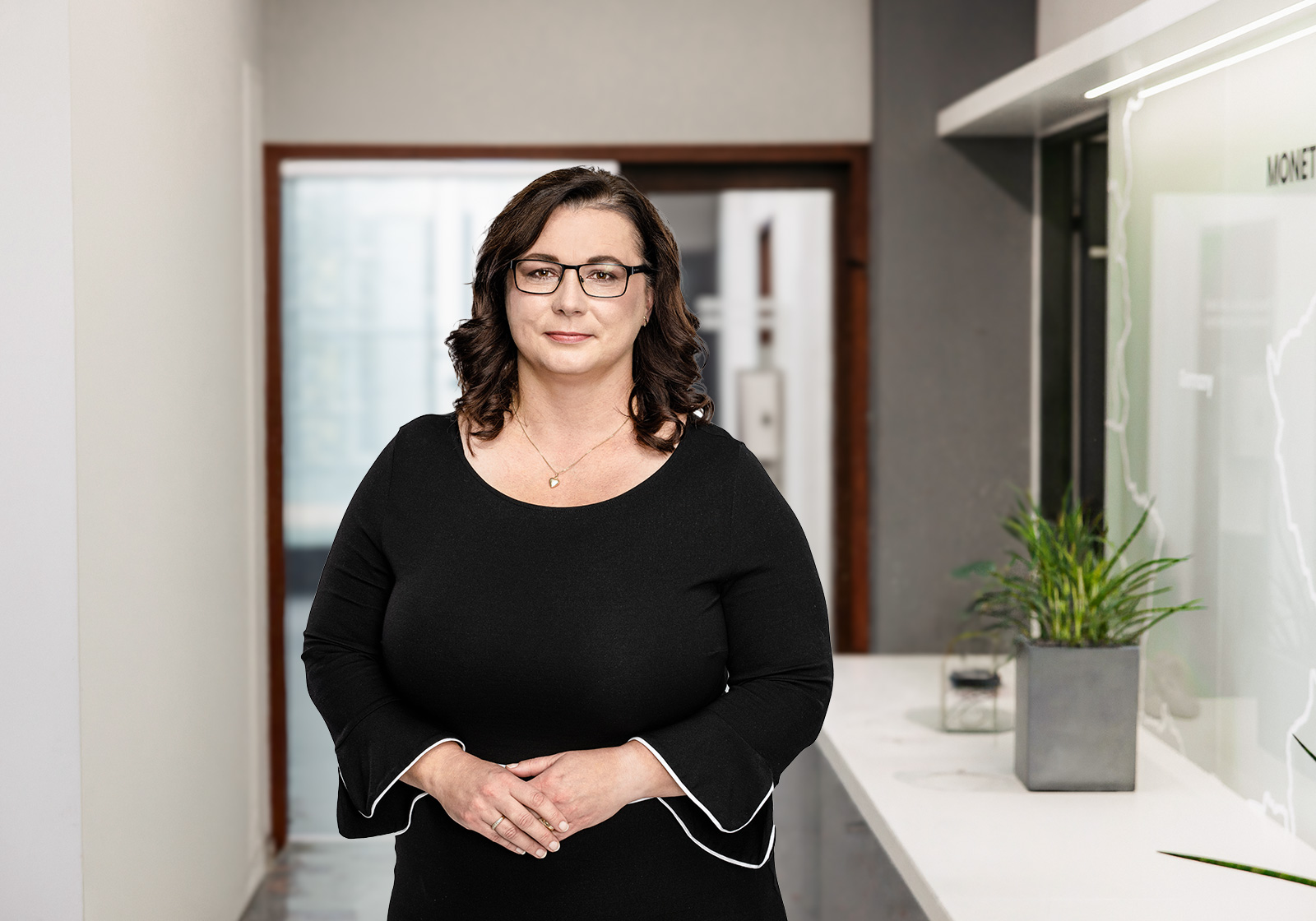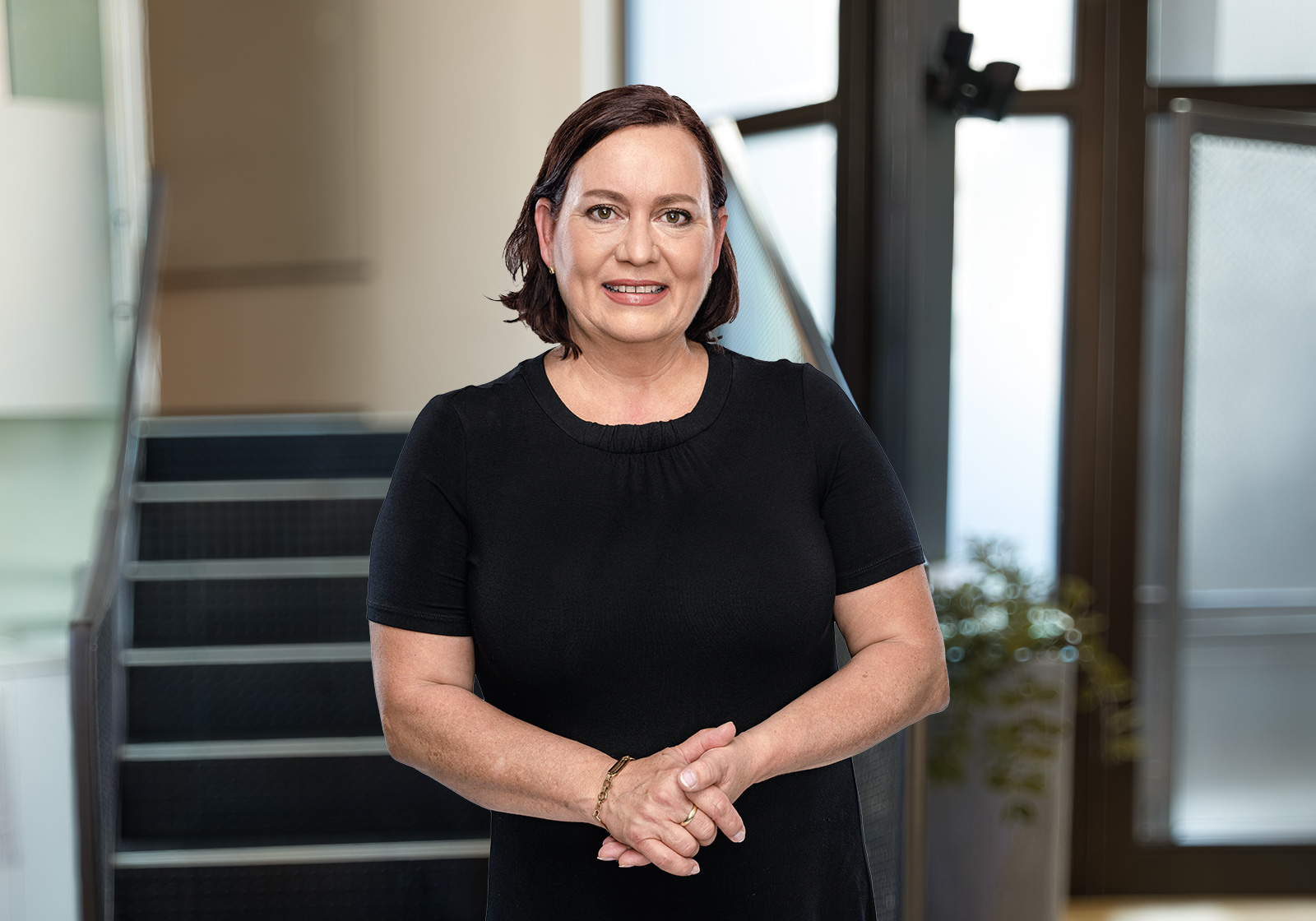
When she joined Monet+ as a sales assistant after her maternity leave, it was still a small startup full of young enthusiasts. Today, Monet+ is the 2025 Company of the Year with turnovers in the hundreds of millions. Petra Svobodová says she was lucky enough to be part of the team that stood at the birth of some very exciting card projects. She witnessed the evolution of cards that were ahead of their time, as well as the building of a dedicated personalization center. How does an assistant become a smart card specialist, and why does she look at the mobile payment revolution with a touch of nostalgia?
Petra, you joined Monet+ right at the beginning, coming straight from maternity leave into a sales assistant role. What was it like back then, joining a young IT firm full of programmers?
It was great! The environment was friendly, the company was buzzing with enthusiasm, and for me, it was a dream job. The management had a clear vision, and my colleagues were smart and open to new technological challenges. Nothing was a problem. Working alongside them was incredibly educational. Being part of the emerging Monet+ team was both fun and a major commitment.
The first massive project that catapulted the company forward was the card system for Slovnaft (now the MOL network) in Slovakia in 1999. What was your role?
That was a true milestone for the fledgling Monet+. It was backed by immense effort, personal responsibility, courage, and the dedication of every single team member. At that time, most fuel retailers—if they had anything at all—were running systems on magnetic stripe cards. Our team, led by Mr. Endrys, managed to convince Slovnaft to go with a project using smart loyalty and payment cards.
It wasn’t just about supplying the cards; it was an entire system, 100% developed in-house by Monet+. From a technological standpoint, it was a breakthrough; for Monet+, it was a stellar reference; and for us, it provided invaluable experience, a boost in confidence, and gave us wings 😁. Back then, I handled the supply of commodities for projects. I took care of purchasing terminals, cards, and stationery, and I managed graphics and logistics with the client.
A turning point for the company was building its own personalization center in Štípa.
The decision to build our own personalization center came when the company moved to a new building due to capacity reasons. By then, Monet+ was already a technological leader in IT, smart card supplies, and personalization software. Our unique know-how, successfully implemented projects, and the prospect of long-term cooperation with the STC (State Printing Works of Securities) turned the idea of building our own “PERSLAB – personalization laboratory” into reality. In a very short time, a modern facility was born, capable of offering sophisticated personalization solutions to the market.
How difficult was it to break into the “major leagues” and obtain certification for Visa and Mastercard bank cards?
Our sales colleagues were becoming increasingly successful, so obtaining EMV certification in 2012 was another vital and necessary step toward expanding our service portfolio. EMV standards are strict and uncompromising. It was a challenge—an extremely demanding and expensive process. To this day, the regular audits take a lot of effort and steady nerves.
The competition from large international centers in Europe is enormous.
We already know we cannot succeed in the field of mass “factory production.” Fortunately, our know-how and strong development background have allowed Monet+ to carve out a different path. Our certified facility, advantageous location, and above all, the expert knowledge of our team allow us to target lower-volume contracts with high added value.
We offer personalization for various types of PKI and multi-functional payment cards, specific graphic designs, non-standard packaging, and various forms of distribution. We can react flexibly and prepare a complete product for the customer—from the initial solution design to implementation and handing the card over to the end user. We provide our partners with the strong support of a stable team, a technological foundation, and the opportunity for product development throughout our cooperation. That is what sets us apart from the competition.
I heard you have a truly unique collection from that era…
Yes. I’ve kept the graphic designs and card proofs since my very first day at Monet+. Looking at these graphics and press proofs, I could reconstruct and tell the story of the card projects realized at Monet+ year by year.
Speaking of large and interesting contracts, the company was involved in projects like Opencard or sKarta. These projects had a complicated media reputation in their time, but technologically, they were said to be top-tier. How do you see it?
Opencard was a challenge and, for its time, a technologically amazing project. With sKarta, that goes double. On the sKarta project, the experience and know-how of our analysts and developers perfectly met a specific market demand. It was a card that uniquely combined payment and authentication functions, including graphic personalization that featured the holder’s ID and ID photo. From my perspective, it was a perfectly executed project and an innovative tool into which we at Monet+ poured all our knowledge.
Today, however, we all pay with smartphones and watches. As someone who has spent their entire career with plastic smart cards, how do you feel about cards moving to the cloud and mobile devices?
From the perspective of the personalization center business, it’s obviously like shooting ourselves in the foot. Monet+ has a huge advantage in that, as a dynamic and successful IT firm, it was there at the birth of these trends too, which open up new and different paths…
But honestly? I’m a smart card enthusiast through and through. For me, smart cards will always be number one as a payment and identification tool. I believe there are many of us like that, and will be for a long time to come 😁