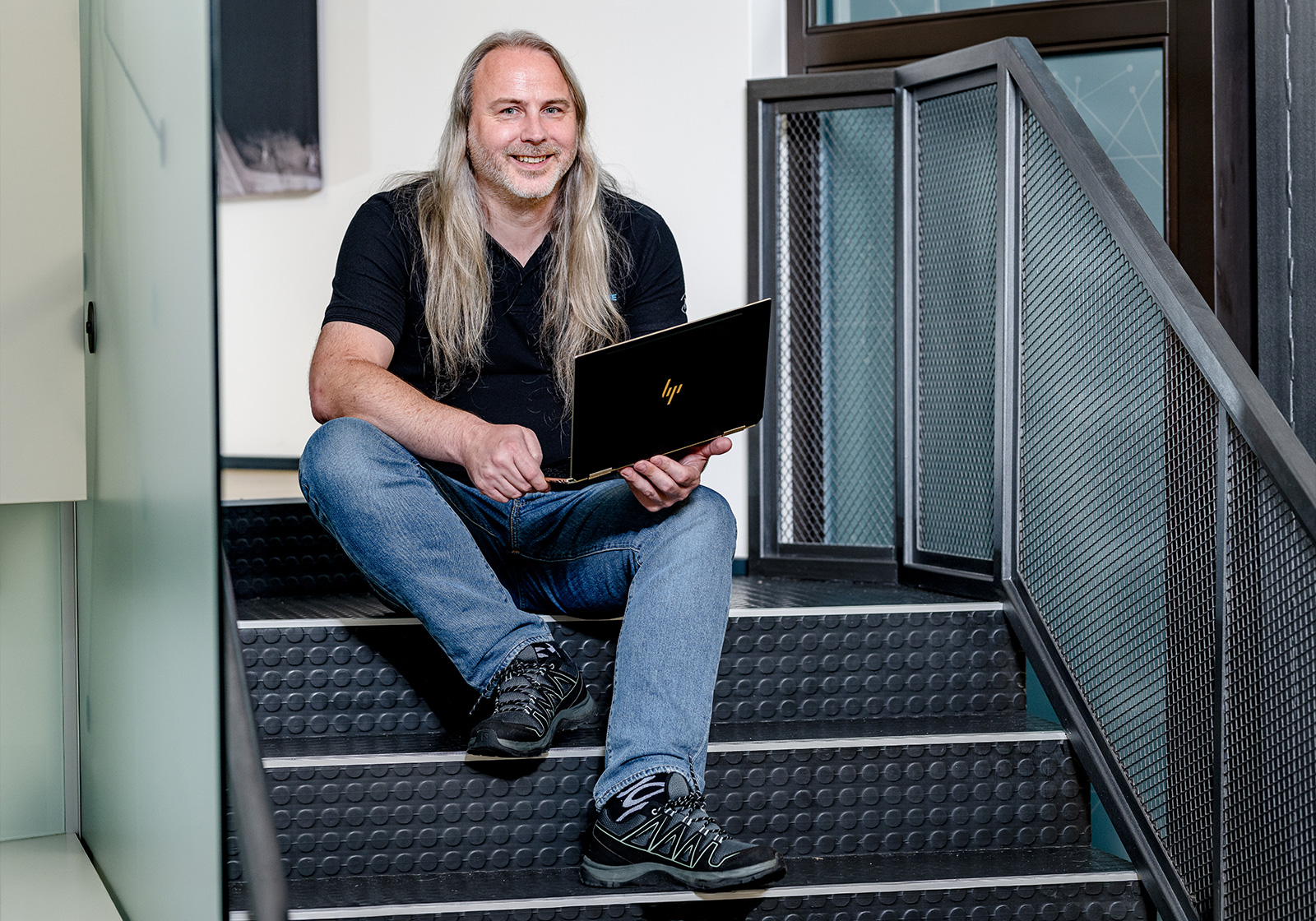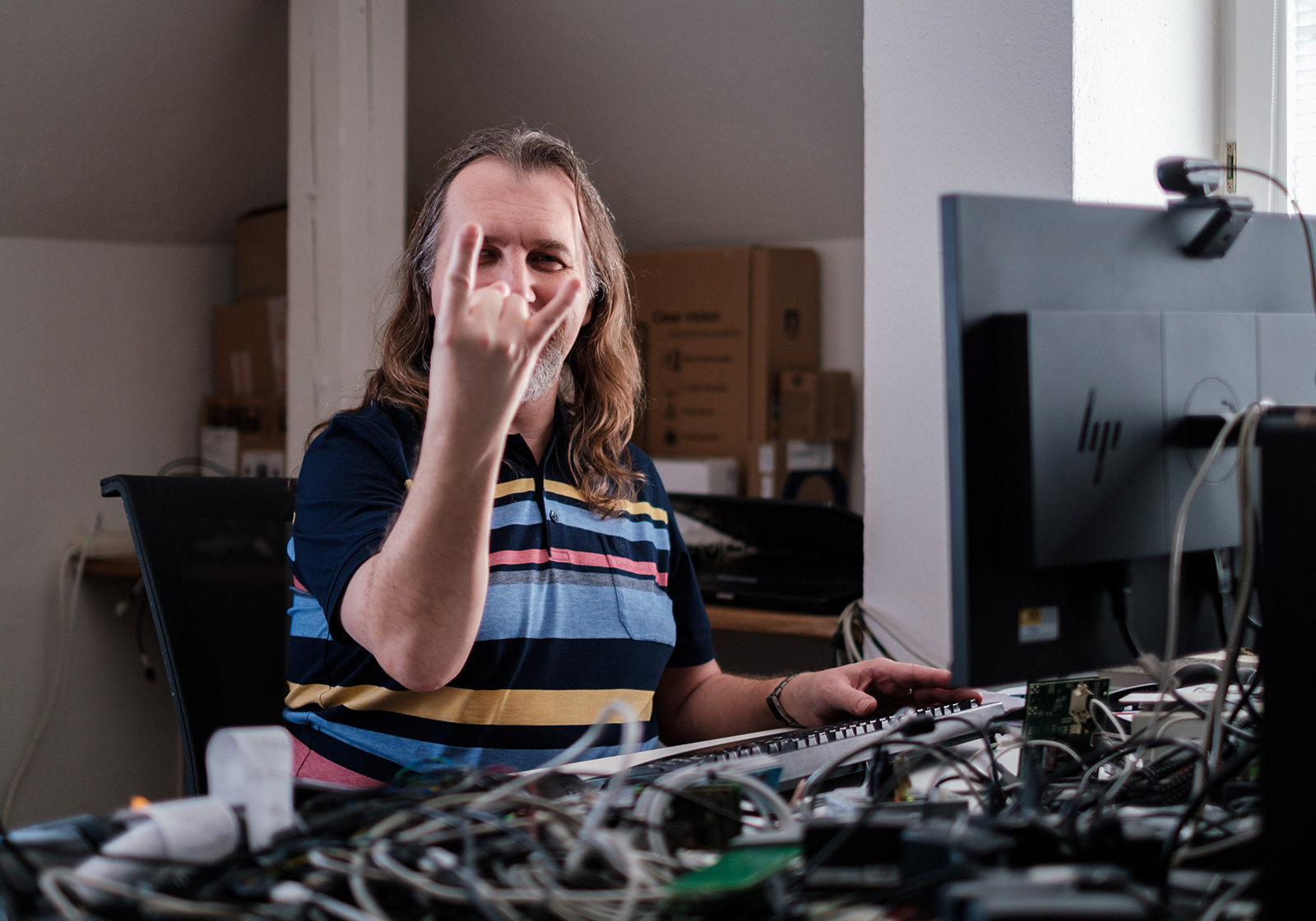
He is one of the technical cornerstones of our company. Tomáš joined more than twenty years ago, back when the firm felt more like an enthusiastic group of friends. Today, his expertise in identification documents, mobile authentication, and security protects the data of millions of users. Even though Monet+ recently snagged the prestigious Company of the Year 2025 title, Tomáš remains a developer at his core. Rather than the spotlight, he’s fueled by solving how to shield our identities from future quantum computer attacks.
Tomáš, you joined Monet+ when chip technology was in its infancy. How did you actually get into it back then?
It all clicked in an interesting way. I was working on my diploma thesis at VUT in Brno, where chip cards were being used. That’s how I first heard about Monet+, and at the same time, my brother Aleš was joining the company. I was writing my thesis for a firm in Ostrava, but when they called me less than a year later with a job offer, I didn’t even let them finish the sentence. My head and heart were already in Zlín. It was such a time of euphoria. The team consisted of a few dozen people, everyone knew each other perfectly, and when a big project came along, the whole company pulled together with incredible passion. Working in that kind of atmosphere was pure joy; it never even occurred to me that I could be anywhere else.
Your domain from the start was chip cards and electronic signatures. But around 2012, a shift came, and you started moving identities into mobile phones. Was that a major turning point?
It was a massive milestone for me. The transition was actually gradual; we were already working with mobile phones within the CASE platform. However, the security element was still the card—in this case, the SIM card. With the rise of smartphones and the arrival of NFC, we began exploring ways to create a secure solution using a smartphone app. That’s when we started developing authentication methods for banks like ČSOB, Česká spořitelna, or Air Bank. When the ČSOB SmartKlíč was launched in 2015, I was incredibly proud to have been there at its inception and to be one of its very first users.
When you’re designing systems that guard access to bank accounts or sensitive data for millions of people, do you feel the weight of that responsibility?
I feel it deeply. There was a time we were working on a system for confirming high-value transactions and we discovered a serious security flaw. The pressure to fix it immediately was immense. Luckily, in our field, lives aren’t directly on the line, but the potential damages can be huge. As a tech guy, I actually enjoy “getting inside” the system and hunting for the problem. Every improvement, no matter how small, gives me a great sense of satisfaction.
Today, you’re already looking a decade ahead. You’re working on a project called KRID, which deals with so-called post-quantum documents. What exactly is that?
Quantum-resistant documents, exactly. Unfortunately, I don’t have as much time for it as I’d like, but it’s something that really fascinates me. Years ago, certain organizations hinted to us that they would stop trusting current encryption algorithms (like RSA) in the future because sensitive data being transmitted today could be compromised later. We know now that with the advent of sufficiently powerful quantum computers, current cryptography will be broken. Therefore, we must prepare for, among other things, issuing documents that can withstand this threat, so we aren’t caught off guard when regulations strictly require it.
Aren’t government officials a bit skeptical about this? After all, quantum computers aren’t exactly a common reality yet.
I remember someone saying a few years ago: “You’re hearing the grass grow and you’re already buying a harvester.” But today, you can see that the grass is actually growing. Cryptographic algorithms are being standardized, chip manufacturers are implementing support for them, and regulations for travel documents should be ready by 2027. It’s simply the direction we have to take.
Monet+ has seen meteoric growth; today it has hundreds of employees and won the prestigious Company of the Year 2025 award. As an “OG” who has seen it all, how do you perceive this transformation from a small crew into a major player?
I see it as a double-edged sword. On one hand, it’s a great feeling—I really enjoyed the award ceremony on TV; it’s fantastic. On the other hand, I felt closer to the times when Monet+ operated more like a “quiet mouse.” Back when we weren’t as visible, but were delivering the most critical and successful systems for the state and banks behind the scenes. Today, the company has grown enormously, and we’re handling a huge number of projects simultaneously. It’s simply no longer that small group where everyone knew everyone. We function differently now, but the technical and security challenges that our work represents are still here. And that is what truly enjoys me and keeps me fulfilled.