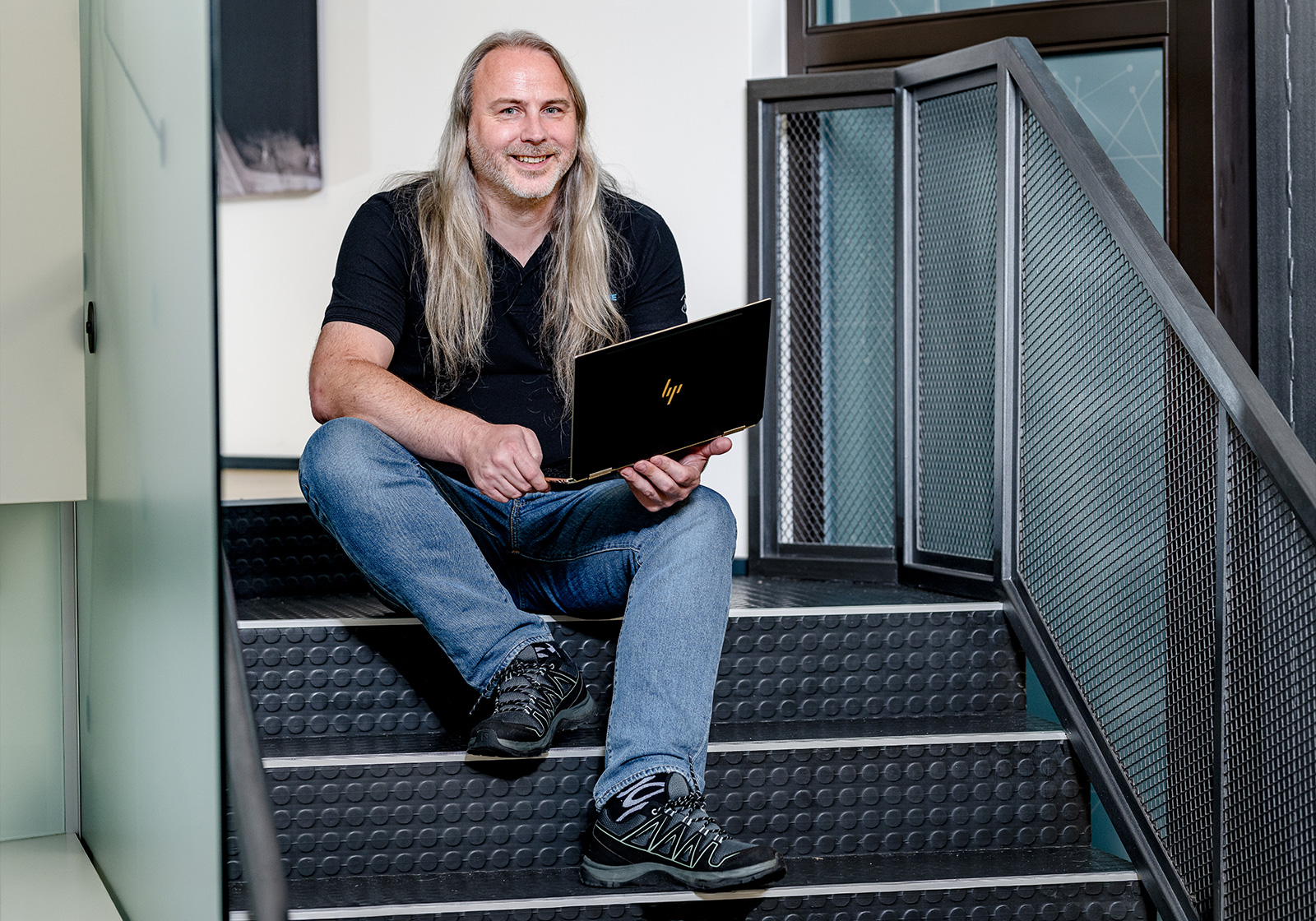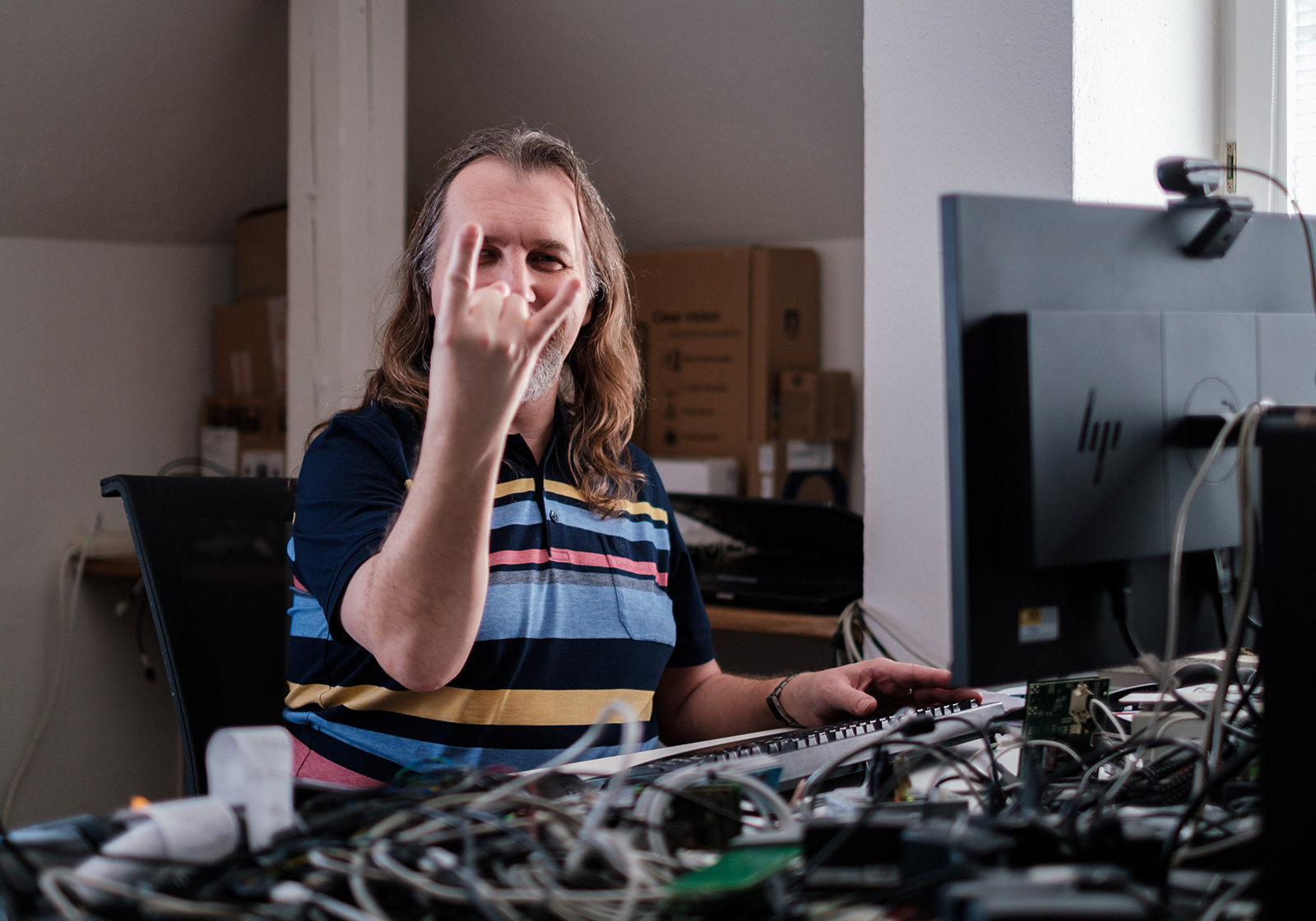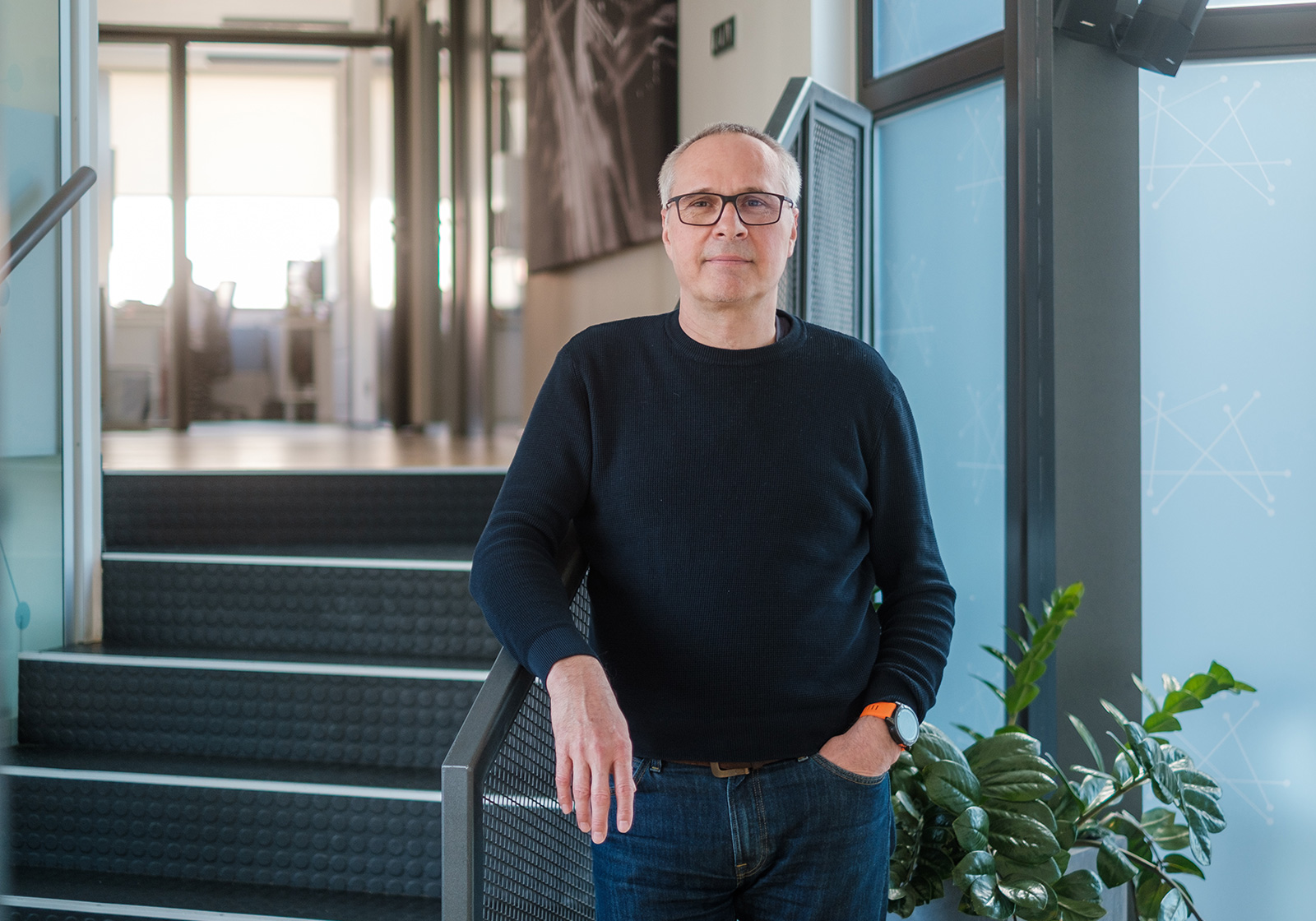
When Eduard Nesiba joined Monet+ in Zlín, the company was based in an ordinary family house, there were about fifteen of them, and a family atmosphere prevailed. Today, Monet+ is the Company of the Year 2025 with revenues in the hundreds of millions, and Eda is considered one of the most experienced experts, flying all over the world as a technological consultant. How did people program in the days without Google, why does a ticket inspector in public transport not actually care if you have money in your account, and how do you tame the promises of ambitious salespeople?
Eda, you’ve been at Monet+ since the very beginning. But word has it you’ve been programming since you were fifteen, which was long before the internet even reached the Czech Republic. How did one learn to write code back then?
Exactly, I started programming about ten years before there was any internet. Today, you just pull up a tutorial on YouTube or ask an AI, but back then, it was much more demanding. Information simply wasn’t easily accessible. I was self-taught through magazine articles—there were almost no books—and, mainly, through trial and error. It was incredibly time-consuming, but I just enjoyed it, so I stuck with it and eventually went to the Brno University of Technology (VUT).
What was it like when you joined Monet+? Was it that classic “garage startup”?
Not a garage, but we were sitting in a family house not far from here. There were about fifteen of us. No great luxuries—I remember there was this terrible instant soup dispenser. Back then, the company was purely focused on development and we had only a few large customers (de facto just one) that we looked after.
What did Monet+ actually grow on back then?
We grew because the founders had unique know-how in the field of smart cards. In the second half of the nineties, online data communications weren’t available at all; there was no fast or affordable internet. So, a smart card essentially functioned as a secure offline wallet.
The first huge milestone that boosted the company was the Kredit payment system and the Bonus loyalty system for Slovnaft, which owned the largest network of gas stations in Slovakia. Both systems were built on smart cards, strong cryptography, and were unique in that they functioned offline. We created a solution for them that, by the way, successfully operated for an incredible fifteen or seventeen years. That was completely unique.
You act as a “liaison officer” at Monet+ between technical development and sales. What does that mean in practice?
I’m essentially a translator between those two worlds. Along with the salespeople, I try to shape the product and what the customer wants. I help them create a meaningful proposal, and then I have to translate that back to the development team so the guys know what they’re actually supposed to program.
Salespeople sometimes like to promise the moon and stars to get a deal. Do you have to rein them in often?
On one hand, I’m on the salesperson’s side; you have to understand the customer’s needs and find a solution together. But on the other hand, it’s occasionally necessary to be moderate with those promises. It’s not about promising some technological sci-fi that can’t be developed. Rather, we try to sell a finished product, and we obviously have time and capacity limits. We simply aren’t going to promise the customer rolls if we haven’t built the bakery yet.
Monet+ was the first in the Czech Republic to introduce tapping a payment card in public transport—something we see in many cities today. How does it actually work? When I tap, the inspector can’t immediately know if the payment actually left my bank account…
That’s a common misconception. The inspector doesn’t care about your money at all. The transport system in buses or trams works offline. When you tap your card, the device just lightning-fast checks if your card is on a “stoplist.” The inspector then sees on their reader only that you successfully “checked in” or tapped in that specific vehicle. The actual deduction of money and settlement with the bank happens asynchronously later on the server.
Thanks to your experience, you were sent as a consultant to major projects abroad. You spent nearly five months in Seoul, South Korea, and then a month and a half in Athens. What was that like?
It was a massive project for their local transport systems. I went there purely as a consultant—to put it simply, I was selling them our know-how. They were doing the development themselves. But they became our partners, and now we participate in international tenders together.
Does Asian IT culture differ much from ours?
Not at all. IT people function exactly the same all over the world. The work culture surrounding coding is completely universal.
Looking back over the years, do you miss the “old” Monet+ from the nineties?
The foundation of that old crew was that we were young and could handle anything. When a deadline for a big project was approaching, it was no problem to work for two days straight. And the company events were legendary—we’d just go to a cabin, pull out the guitars, party, and someone always overdid it with the celebrations (laughs).. Today, we are a large company with international reach, we have over 300 people, and you logically can’t apply that pure “punk” attitude anymore. But I still enjoy the work after all these years for the exact same reason—it’s constantly evolving technologically, and it’s always a huge challenge that keeps you thinking.