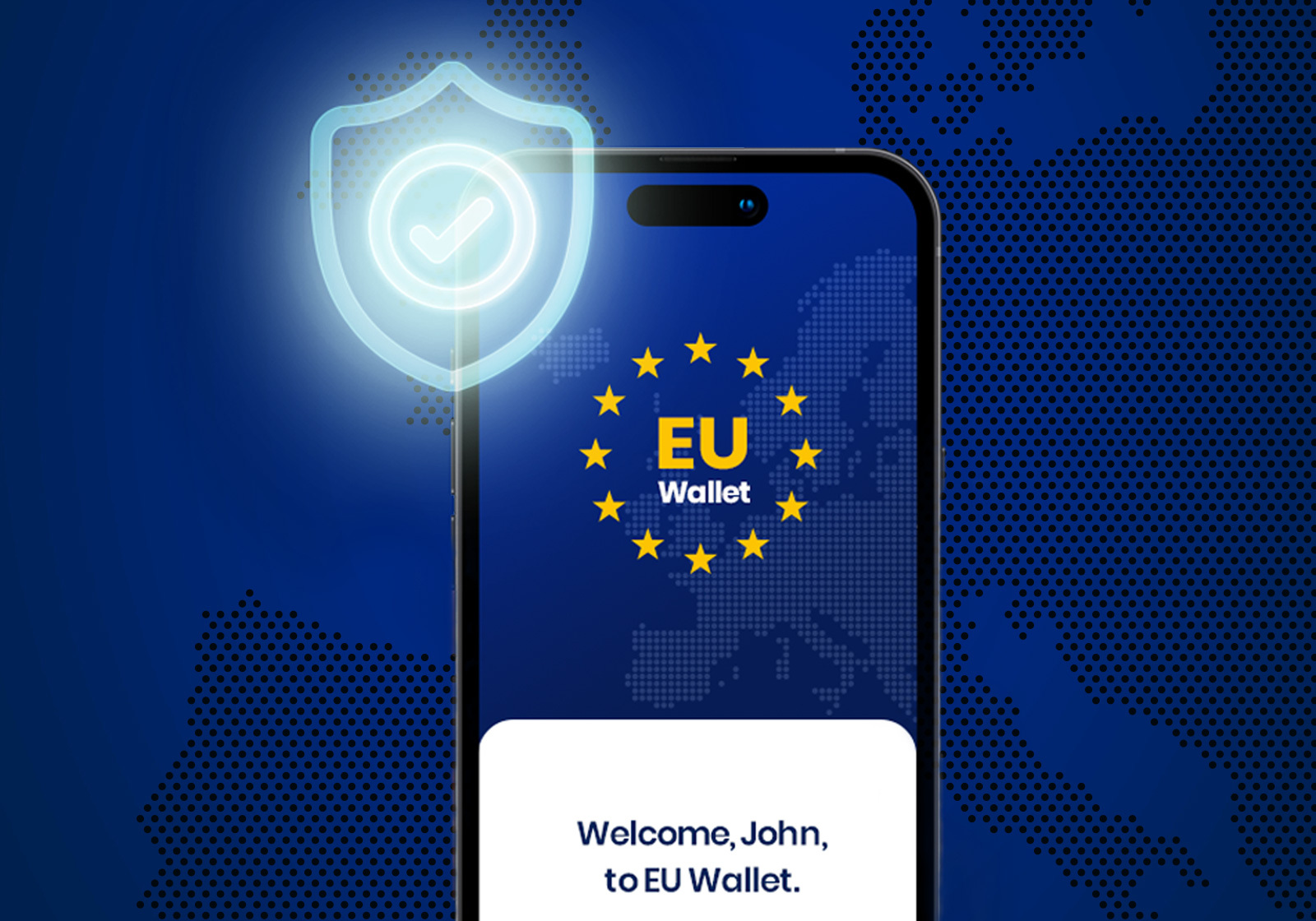
The eIDAS 2.0 regulation introduces the European Digital Identity Wallet (EUDIW). For users, this offers a digital alternative to physical ID documents and plastic cards. For banks, financial institutions, and other entities in regulated sectors, it creates a legislative mandate to integrate this innovation technologically. The question is: how can you turn a regulatory obligation into a competitive advantage?
Imagine opening a bank account in another EU country or securing a mortgage remotely within seconds. Current processes—which involve photographing documents, calls with operators, or physical branch visits—are often tedious. With the arrival of the EUDIW, this process will be reduced to a few clicks on a smartphone. The new eIDAS 2.0 regulation mandates a cross-border, EU-recognized digital identity wallet that member states must provide to their citizens.
Financial institutions must accept the EUDIW within 36 months of the adoption of the relevant Implementing Acts, which points toward the end of 2027. For modern banks, the EUDIW is a tool to significantly enhance User Experience (UX)—particularly in the onboarding process—while simultaneously reducing operational costs for KYC (Know Your Customer).
Implementing the EUDIW into banking systems requires not only legal compliance but also alignment with the complex European Architecture and Reference Framework (ARF).
To prepare, relying parties must address several key areas:
Relying Party Registration
Official registration in the member state where the entity is established, including a precise definition of the intended use of the wallets and the specific data sets required from users.
Authentication and Validity Verification
Verifying the validity of identification data and Electronic Attestations of Attributes (EAA). This includes communicating with Trusted Lists across the EU for cross-border acceptance.
Identification
Proper identification of the entity toward the wallet user.
Strong User Authentication (SUA / SCA)
Support for issuing and using attestations for Strong Customer Authentication.
Qualified Electronic Signatures (QES)
Integration of qualified signatures that are legally equivalent to handwritten signatures, including the differentiation of signatures for natural persons for non-professional purposes.
Data minimization and selective disclosure
Implementing systems that allow a user to prove a fact (e.g., being of legal age) without sharing unnecessary personal data (e.g., the exact date of birth).

Why Choose Monet+ Know-How for Integration?
Building a connection to a pan-European ecosystem internally represents a significant technological and procedural burden for a bank’s IT department. Monet+ helps overcome this barrier thanks to 30 years of experience in applied cryptography and our position as a key supplier for Czech eGovernment and leading financial institutions.
We provide the technological infrastructure for the personalization of biometric documents and are the developers behind the eObčanka (eID) authentication middleware. For banking institutions, we deliver technologies for managing client banking identities, including integrations for the Citizen’s Portal and the BankID system.
Security clearances from the National Security Authority (NBÚ) and the National Cyber and Information Security Agency (NÚKIB), combined with our deep integration into state infrastructure, guarantee the highest level of trustworthiness and full readiness for eIDAS 2.0 standards. Thanks to long-term cooperation with leaders in the banking and insurance markets, we possess a profound understanding of the financial environment and regulations such as PSD2, DORA, or the upcoming PSR.
Partnering with us provides a technological solution that not only meets the regulatory framework of financial services but also ensures seamless integration into existing systems, allowing for smooth process adaptation and enhanced client satisfaction.
Complex cryptography and the management of keys and certificates.
Implementation of protocols and processes for ARF, STS, ETSI OpenID Connect, and other standards.
Seamless connection of the EUDIW ecosystem with existing Identity Management (IAM) systems.
Our solution provides a gateway that simplifies and accelerates technical integration with EUDIW services, allowing you to focus your time on fully capitalizing on the business potential.